Service / DRYWALL INSTALLATION

Drywall Installation.

New-construction and full-room drywall installation across Montgomery County. Hung to PA UCC tolerances with proper corner bead, blocking, and fire-tape detailing.

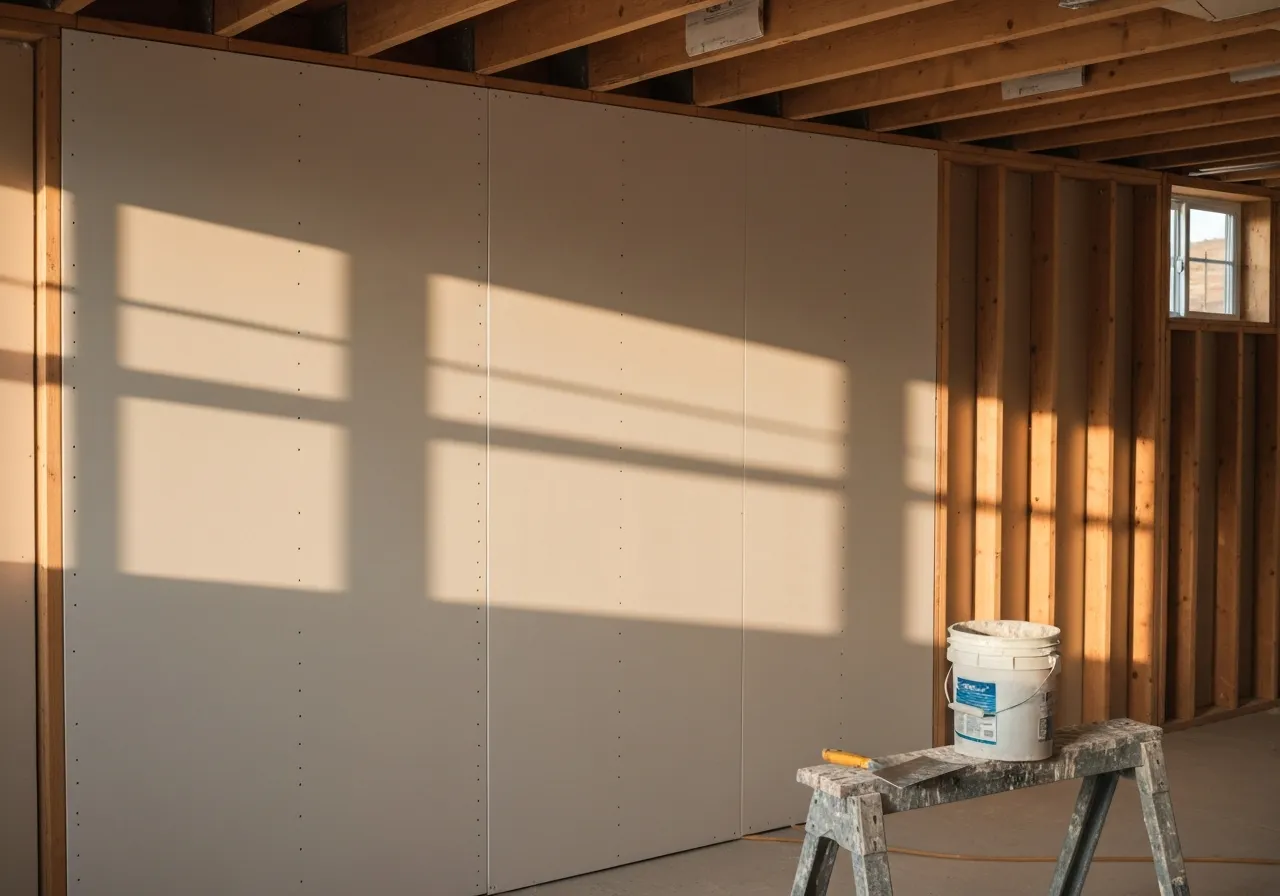
Basement or new addition mid-drywall installation, fresh white gypsum board hung on wood-stud framing, joint compound bucket and sawhorse in foreground, warm late-afternoon light from a window
FILE / 2026 Drywall Installation

The work

How drywall installation actually goes on a JL job.

/01

New drywall installation is a precision trade, not a commodity service. Board selection, layout planning, and blocking decisions made on the hang day determine whether the taped and finished wall looks like a flat plane or like a surface that was assembled in pieces. JL Drywall and Painting approaches installation with the same discipline applied to finish work: every fastener driven to the correct depth, every seam located at a stud or properly backed, every outside corner protected with metal or vinyl bead before any compound touches the wall.

/02

Residential installation in Montgomery County frequently involves working around the constraints of existing construction — load-bearing wall penetrations, HVAC rough-ins, and the occasional surprise when you pull a ceiling in a 1960s East Norriton split-level and find that the framing does not match any standard on-center layout. every room is measured before boarding begins, and the layout plan accounts for window and door rough openings, ceiling height transitions, and any soffits or knee walls that require returns. Proper layout reduces butt joints, which are the most difficult seams to tape and finish invisibly.

/03

Board selection is specified by application. Standard 1/2-inch gypsum board covers most wall and ceiling applications, but curved walls, archways, and tight-radius returns use 1/4-inch flexible board. Ceilings prone to sag in humid attic-adjacent spaces get 5/8-inch board hung perpendicular to the joists, which reduces deflection between framing members. Fire-rated assemblies — required in attached garages, mechanical rooms, and stairwells under the PA Uniform Construction Code — use Type X 5/8-inch board with the appropriate tape and compound schedule. If a permit is required for the scope of work, Jose identifies this during the estimate walk and coordinates with the homeowner on the application process.

/04

Installation is followed by a multi-coat taping and finishing sequence. Embed coat using setting-type compound at all tape seams and corner bead, followed by two finish coats of lightweight all-purpose compound feathered progressively wider. The final coat is sanded to a Level 5 equivalent finish on walls that will receive satin or semi-gloss paint, or a Level 4 finish for walls taking flat or eggshell. The difference matters: a Level 4 finish under semi-gloss paint in raking light will show every tool mark and bead edge, while a Level 5 skim coat creates a uniformly smooth surface that holds up under any sheen.

/05

JL Drywall and Painting serves drywall installation projects in North Wales, East Norriton, King of Prussia, Blue Bell, and Skippack. Whether the job is a single finished basement room or a full-floor new installation during a whole-house renovation, Jose walks the scope before any boards are ordered.
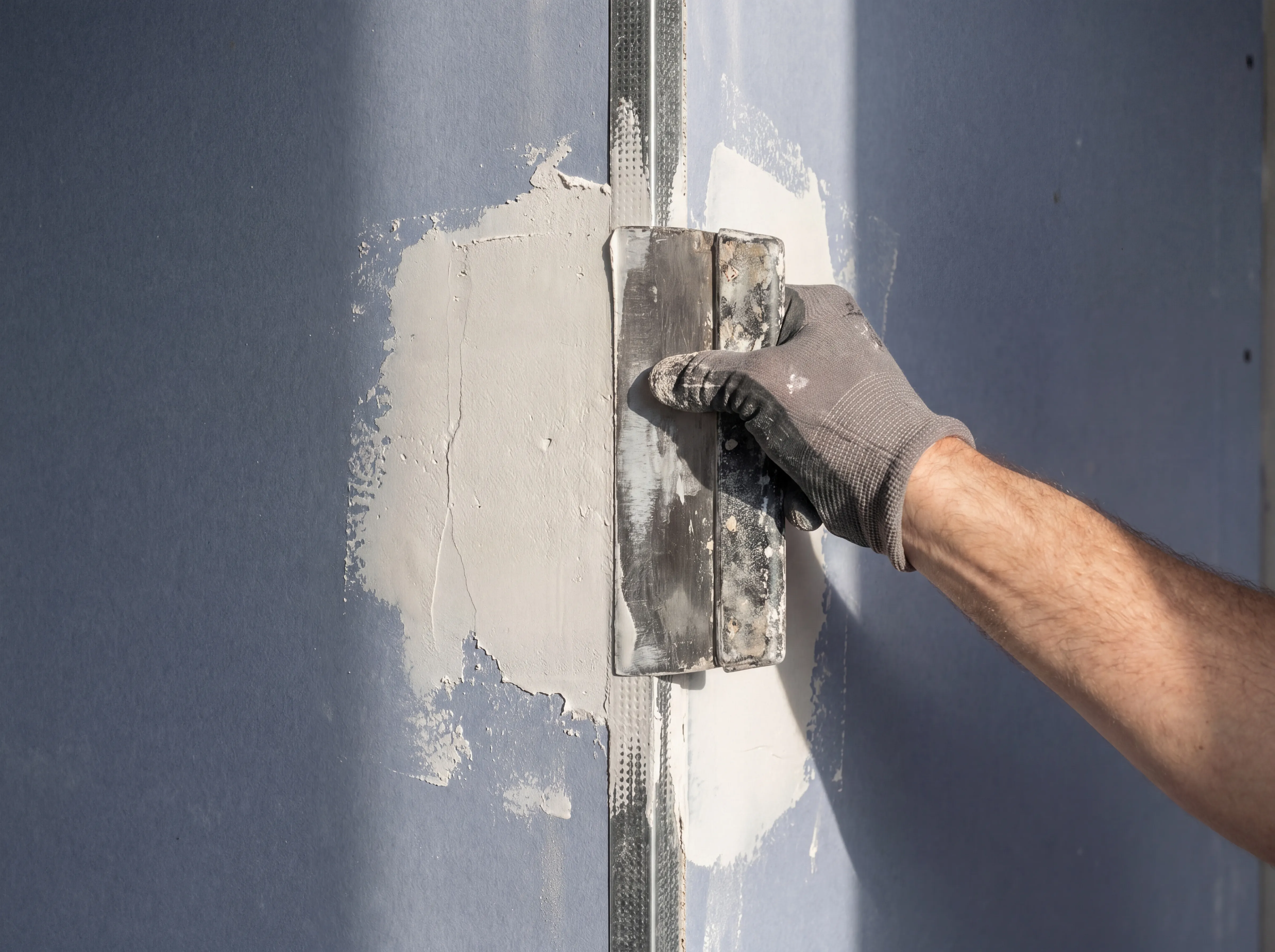
Tight macro close-up of a galvanized metal corner bead being mudded into a wall corner with a 6-inch drywall taping knife, fresh white joint compound feathering into the gypsum board on either side
Drywall Installation · process detail

Frequently asked

About drywall installation.

/01 What drywall thickness do you use for walls versus ceilings?

Standard wall installations use 1/2-inch gypsum board, which balances weight and rigidity for 16-inch on-center framing. Ceilings use 5/8-inch board, hung perpendicular to the joists, to reduce sag over time — particularly in rooms above unconditioned attic spaces where humidity cycling can cause lighter board to bow. 1/4-inch flexible board is reserved for curved walls and tight archways. Fire-rated assemblies required under the PA Uniform Construction Code — attached garages, stairwells, mechanical rooms — use Type X 5/8-inch board on both sides of the assembly.

/02 Do I need a building permit for drywall installation?

Cosmetic drywall repair and straightforward room re-boarding typically do not require a permit in most Montgomery County municipalities. However, drywall installation tied to a structural alteration, basement finish, or room addition usually does require a building permit under the PA UCC. Jose reviews the scope during the estimate walk and advises on permit requirements for each specific jurisdiction — the rules vary between North Wales Borough, East Norriton Township, Upper Merion Township (King of Prussia), Whitpain Township (Blue Bell), and Skippack Township. HICPA registration is required by state law for any residential improvement work over $500, regardless of permit status.

/03 What is a Level 5 drywall finish and when do I need it?

Gypsum Association finish levels run from Level 0 (unfinished) to Level 5 (skim-coated). A Level 4 finish — the standard for walls painted in flat or matte sheen — has all seams and fasteners coated and sanded, but no skim coat over the entire surface. A Level 5 finish adds a thin full-surface skim coat of joint compound or veneer plaster, then sands to a uniform substrate. This is the correct specification for walls or ceilings that will receive satin, semi-gloss, or gloss paint, or walls that will be lit by strong raking light from large windows or skylights. Skipping the Level 5 skim on a high-sheen surface guarantees visible texture variation once the paint is on.

/04 Can you install drywall around existing electrical and plumbing rough-ins?

Yes — coordinating with existing rough-ins is standard on residential renovation and remodel projects. the crew marks box locations before boarding, cuts openings with a dedicated router or keyhole saw (not a utility knife dragged through the board), and verifies that all rough-in work has been inspected and closed out before the boards go up. If any rough-in work is incomplete or has not been inspected, the boarding schedule is adjusted to avoid creating a situation where finished drywall has to come back down for a missed inspection.

/05 How long does drywall installation take for a typical room?

A single average-size bedroom — roughly 12x12 feet with standard 8-foot ceilings — takes one to two days for hang, tape, and first finish coat, with additional days for subsequent coats and sanding. The multi-coat process requires drying time between coats, which cannot be rushed without risking shrinkage cracks. Larger spaces, cathedral ceilings, or rooms with extensive returns and soffits take proportionally longer. the estimate provides a realistic timeline during the estimate — not a best-case optimistic number — because compressed timelines on compound work produce visible defects.

Ready to book drywall installation?

Walk it with Jose. (484) 435-5154