The work
How interior painting actually goes on a JL job.
Interior painting is not difficult if the prep is right. The reason painted rooms peel, streak, or show lap marks is not the paint — it is substrate preparation and primer selection errors made before the first finish coat is applied. JL Drywall and Painting approaches interior painting as a finish trade: the prep work is as deliberate as the painting, and the primer specification is chosen for the specific substrate and sheen rather than applied as a formality.
Every interior painting job starts with substrate assessment. Walls in Montgomery County's older housing stock — the 1970s colonials in King of Prussia, the postwar split-levels in East Norriton, the pre-1940 colonials in North Wales — have surface histories that affect how the new paint system performs. Oil-based paint was the standard finish coat through the 1970s and into the 1980s, and latex paint applied directly over cured alkyd without proper inter-coat adhesion will peel in sheets within two to three years. the crew identifies oil-based paint surfaces by feel (harder, more brittle edge when scribed with a utility knife) and by cross-hatch adhesion test, then specs the appropriate oil-based or shellac-based primer for the first coat.
Sheen selection is a design and technical decision. Flat or matte finish hides surface imperfections but is difficult to clean and shows scuff marks in high-traffic areas. Eggshell and satin provide a light sheen that improves washability while still tolerating modest substrate variation. Semi-gloss is correct for trim, casings, and door faces where durability and easy cleaning outweigh the requirement for a perfectly smooth substrate. Gloss is reserved for doors and specialty surfaces where the highest durability and reflectivity are required. Jose advises on sheen selection during the estimate walk, taking into account the room's natural light, the condition of the substrate, and the functional use of the space.
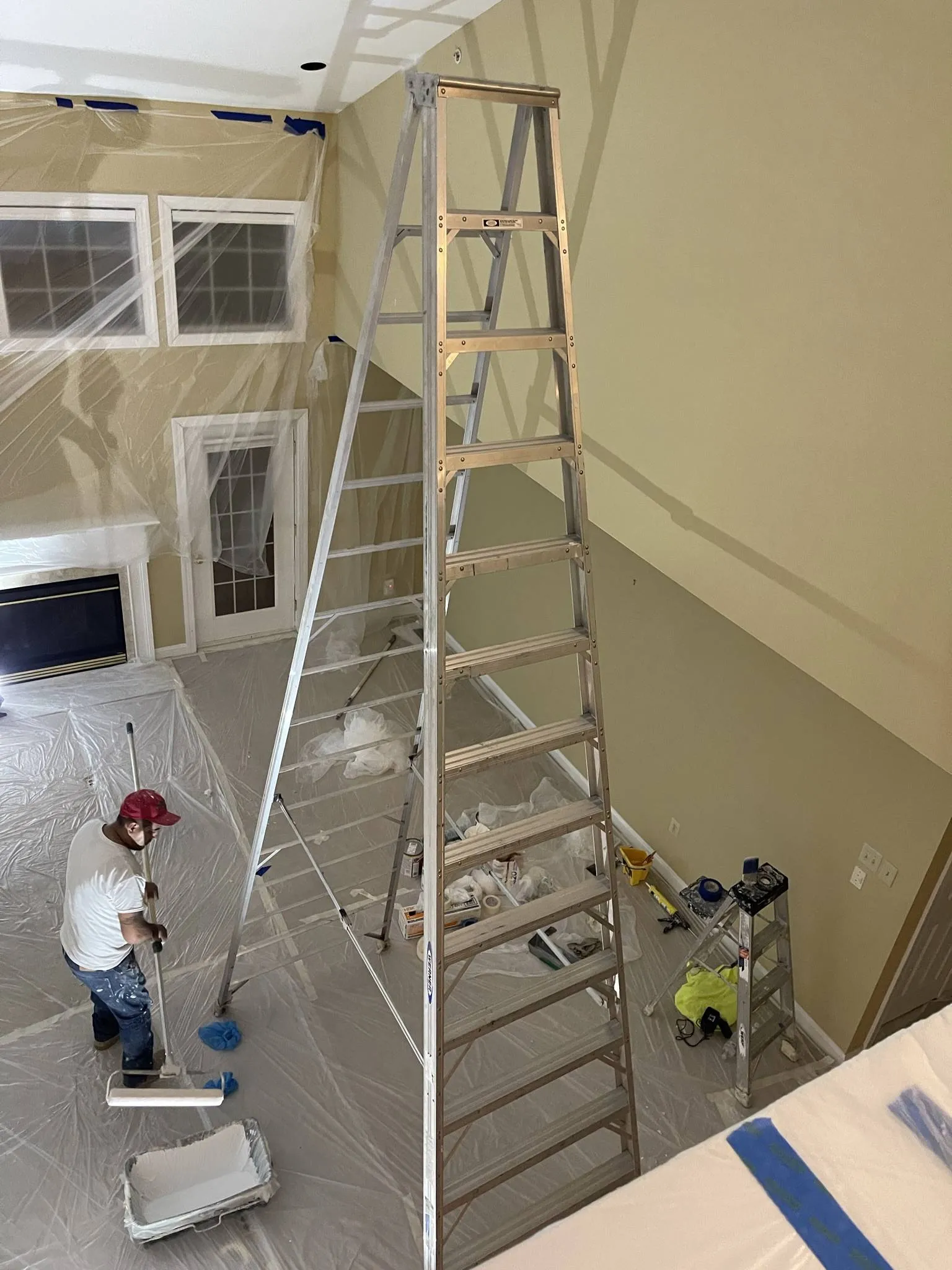
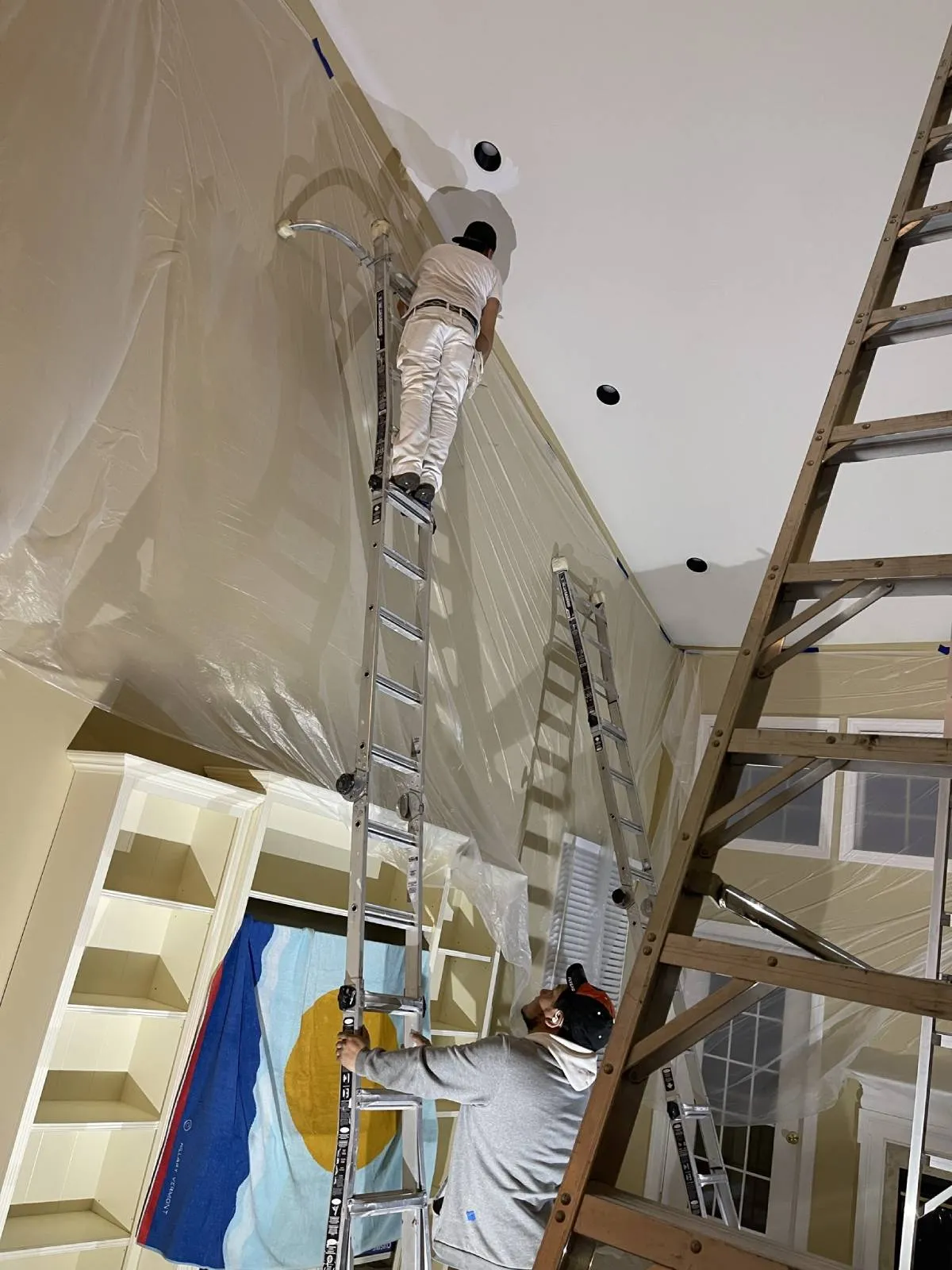
Prep work on a full-room interior paint includes: filling all nail holes, dings, and minor repairs with spackle or lightweight compound; caulking all trim joints where wood has separated from the wall surface; sanding any high spots or previous repair areas to flat; applying the appropriate primer to all repaired areas and any substrate transitions; and masking all trim, ceiling lines, switch plates, and hardware before cutting in. JL does not rely on a single masking product for all conditions — the masking tape specification depends on the surface and how long the tape will be in contact with the substrate.
JL Drywall and Painting uses professional-grade paint products from major manufacturers: Sherwin-Williams, Benjamin Moore, and PPG are all represented in the product line, and we will work with homeowner-specified products if a specific color or line is preferred. The application is two finish coats minimum, applied by brush at all edges and by roller on field areas. On smooth Level 4 or Level 5 substrates, the crew uses a 3/8-inch nap roller; on textured surfaces, a 1/2-inch or thicker nap is used to ensure the valleys of the texture receive coverage without build-up on the peaks.
Interior painting projects are available across the full service area — North Wales, East Norriton, King of Prussia, Blue Bell, and Skippack. Whole-room, multi-room, and pre-sale whole-house repaints are all within scope. JL provides a written estimate with product specifications, coat count, and timeline before any work begins.