Service / POPCORN CEILING REMOVAL

Popcorn Ceiling Removal.

Safe removal of spray acoustic texture with asbestos testing protocol, substrate repair, and smooth or light-texture finish reapplication.

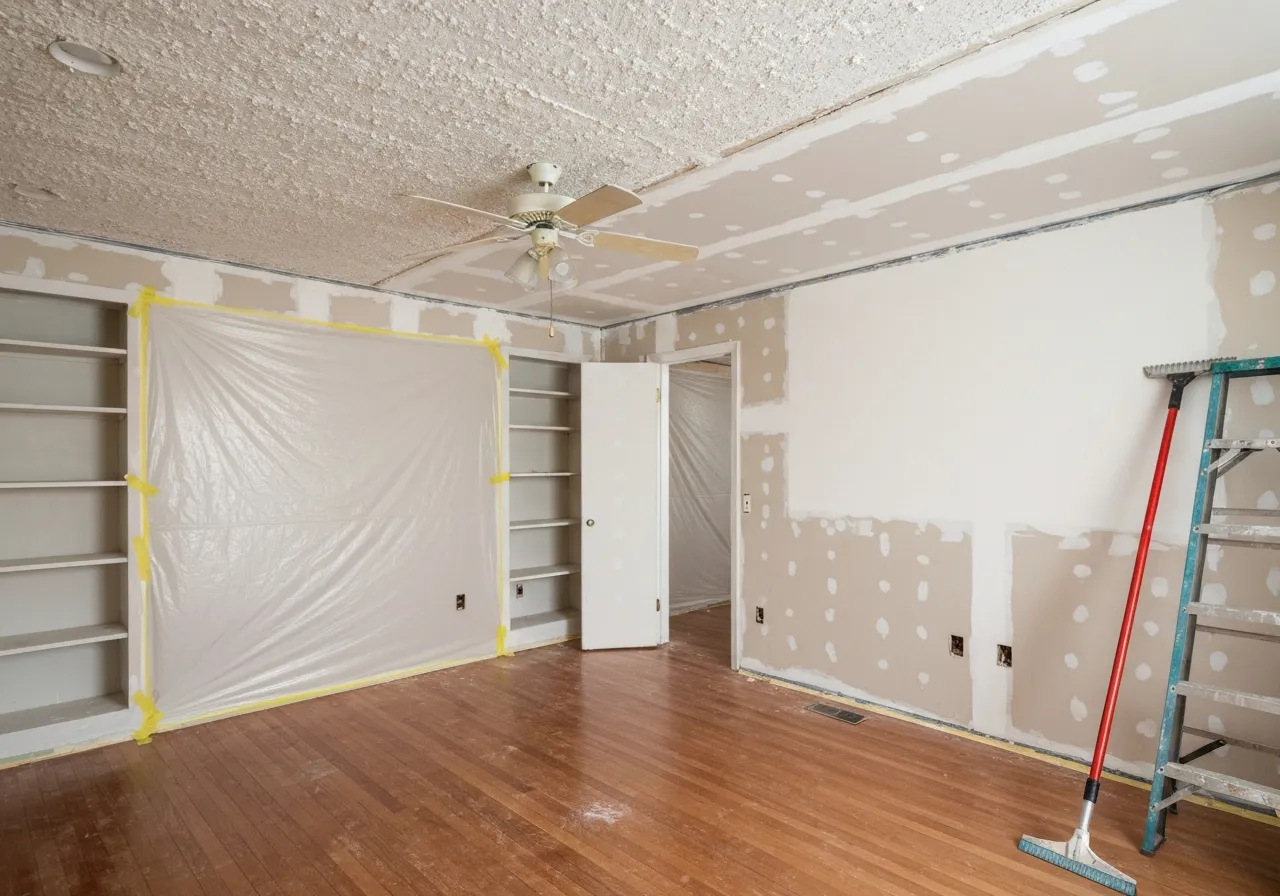
Interior of a 1970s Pennsylvania bedroom mid-popcorn-ceiling-removal, plastic sheeting taped to the walls, half the popcorn ceiling already scraped smooth, scraping pole leaning against a step ladder
FILE / 2026 Popcorn Ceiling Removal

The work

How popcorn ceiling removal actually goes on a JL job.

/01

Popcorn ceiling texture — also called acoustic spray, cottage cheese ceiling, or spray texture — was the standard ceiling finish in American residential construction from roughly the early 1960s through the late 1980s. In Montgomery County's housing stock, any home built before 1980 may have a ceiling containing asbestos-mixed acoustic spray texture. The asbestos component was used as a binder and fire retardant in the spray compound, and it was not banned from ceiling texture products until 1977. Homes built from 1977 through the late 1980s may still have popcorn ceilings, though those post-ban installations use vermiculite or polystyrene aggregate rather than asbestos.

/02

The first step in any popcorn ceiling removal project in a pre-1980 home is testing. JL does not scrape first and ask questions later. A small sample of the existing texture is collected from an inconspicuous area and sent to a certified asbestos testing laboratory for analysis. If the result is negative for asbestos, removal proceeds using standard wet-scrape method: the ceiling is moistened with a pump sprayer to soften the compound, then scraped clean with a wide drywall knife. If the result is positive, the work is not performed until a certified asbestos abatement contractor has removed the material. JL provides referrals and can schedule the abatement sequence, but HICPA registration does not cover asbestos removal — that work requires EPA and state DEP certification.

/03

Once the texture is removed and the ceiling is clean, the substrate condition determines the next step. Many ceilings under popcorn texture were finished to a low standard specifically because they knew the spray coat would cover the imperfections — meaning the underlying drywall may have unfilled fastener dimples, visible tape seams, and unfinished butt joints. These defects must be addressed before any new finish is applied. the crew evaluates the substrate after scraping and provides a secondary scope if significant repair work is needed.

/04

Finish options after removal are: smooth Level 5 skim coat (the most requested — it modernizes the room and is compatible with LED lighting that makes old textures visible), light orange peel spray (a lower-profile texture that provides some visual interest and hides minor substrate variation), or knockdown texture. The most common choice in the Blue Bell, King of Prussia, and Skippack markets is a smooth skim coat applied in two coats and sanded to a Level 5 finish, then primed with a PVA primer before the ceiling paint.

/05

Popcorn ceiling removal creates significant dust and debris. the crew uses plastic sheeting to protect floors and adjacent surfaces, and a HEPA shop vacuum for dry debris prior to wet scraping. The wet scraping method substantially reduces airborne dust compared to dry scraping. If the room is furnished, furniture is moved to the center and covered, or removed from the room entirely depending on the layout and the scope.
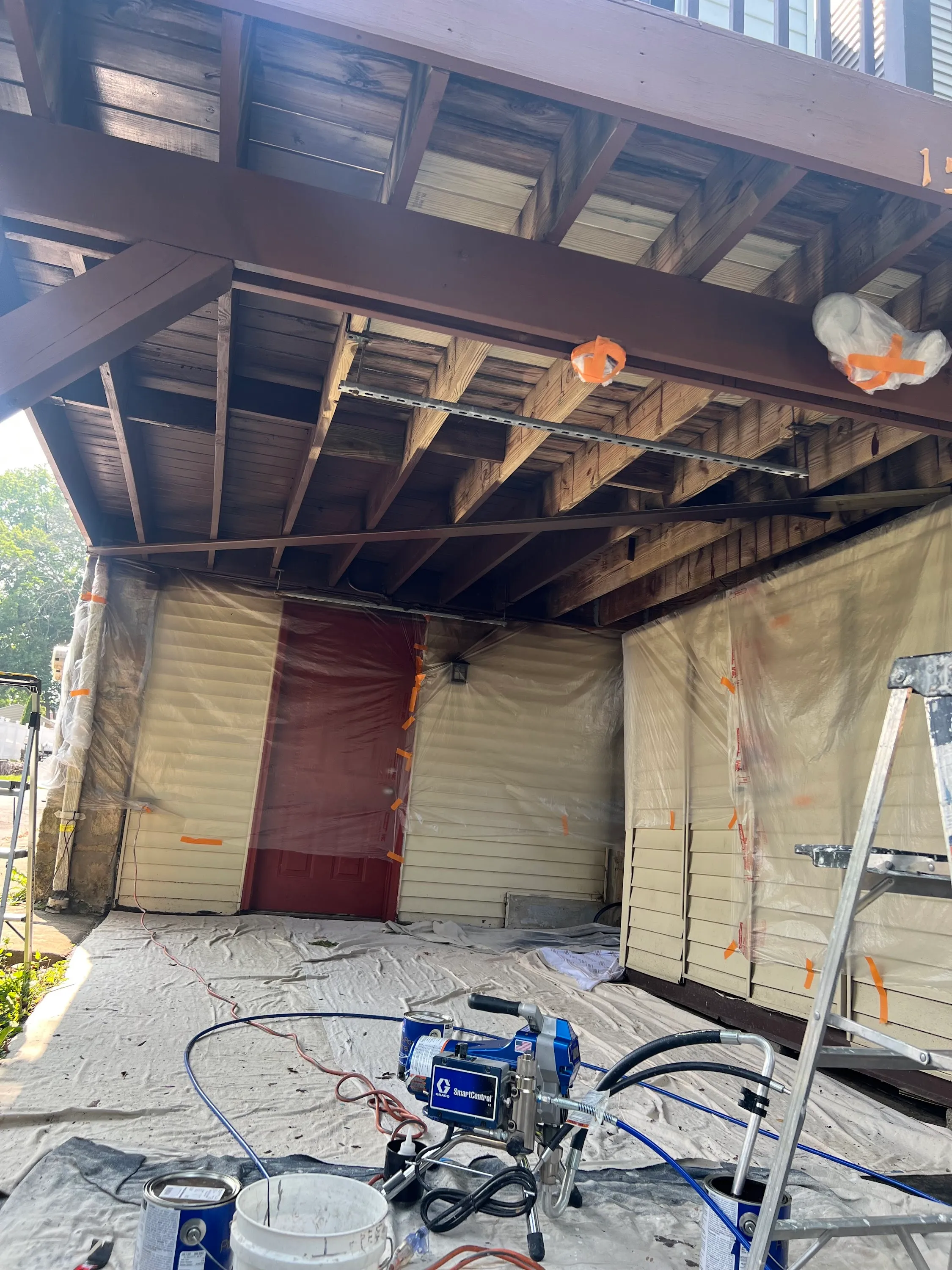
Pro-grade Graco airless paint sprayer set up on drop cloth under a wood porch ceiling with masking tape and plastic sheeting protecting the surrounding walls — the same containment discipline JL applies to popcorn-ceiling removal
Popcorn Ceiling Removal · process detail

Frequently asked

About popcorn ceiling removal.

/01 Does my popcorn ceiling contain asbestos?

If your home was built before 1977, the popcorn ceiling texture may contain asbestos. The US EPA banned asbestos from spray-on surfacing materials in 1977, but homes built from 1977 through the late 1980s may still have popcorn ceilings using non-asbestos compounds. The only way to confirm is a laboratory test — visual inspection cannot distinguish asbestos from non-asbestos texture. JL does not begin any scraping work on pre-1980 ceilings without a test result on file. Test kits are available from hardware stores for homeowner collection, or we can arrange professional sampling through a certified inspector.

/02 What happens if my popcorn ceiling tests positive for asbestos?

If the test is positive, the texture must be removed by a certified asbestos abatement contractor before any other work can proceed. This is a legal requirement in Pennsylvania under the DEP asbestos regulations — disturbing asbestos-containing ceiling texture without proper containment, negative pressure, and licensed personnel is a code violation. JL does not perform asbestos abatement — HICPA registration does not cover that scope — but he can provide referrals to licensed abatement contractors in Montgomery County and can schedule the sequencing so that the substrate repair and new finish work follows immediately after abatement clearance.

/03 What does the ceiling look like after popcorn removal?

The ceiling after scraping will typically have visible tape seams, unfilled fastener dimples, and in some cases scuff marks from the scraper or moisture damage from the wet scraping process. The original drywalling under popcorn texture was done to a minimal standard because the spray coat was expected to cover the imperfections. This is normal and expected — the substrate repair and skim coat work that follows brings the ceiling to a smooth, paint-ready Level 5 finish. the crew evaluates the substrate condition after scraping and provides a scope for any additional repair work before the skim coat begins.

/04 Can you just paint over popcorn texture instead of removing it?

Yes, and in some cases that is the right call. If the texture is in good condition — no peeling, no water staining, no chunks missing — painting over it is a valid option that avoids the mess and cost of removal. The primary reason homeowners choose removal over painting is aesthetic: popcorn texture traps dust, is difficult to clean, and shows particularly badly under modern LED lighting with warm color temperatures. If your goal is to modernize the room without a full removal project, a fresh coat of flat ceiling paint applied with a thick-nap roller will refresh the color without disturbing the texture.

/05 How long does popcorn ceiling removal take for a typical room?

A single room — roughly 12x14 feet — takes approximately two to three days when you account for the scraping, substrate repair, skim coat application, drying time, sanding, and primer coat. Larger rooms or ceilings with significant substrate damage take proportionally longer. the written estimate provides a room-by-room timeline in the written estimate. If the project covers multiple rooms, JL works through them sequentially to maintain compound drying schedule and avoid creating dust in areas where compound is curing.

Ready to book popcorn ceiling removal?

Walk it with Jose. (484) 435-5154