The work
How drywall repair actually goes on a JL job.
Drywall repair is the most misunderstood service in finish work. It looks simple — fill a hole, sand it smooth, paint over it — but the failure mode most homeowners have seen is a repair that reads clearly through the finished paint, either as a shadow under the tape or as a texture mismatch that catches every light angle. The difference between a repair that disappears and one that advertises itself is prep, product selection, and coat count.
The oldest and most common repair call in Montgomery County's 1960s–1990s housing stock is the nail pop. Lumber framing shrinks as it dries over decades, and as the wood retreats from the fastener, the nail or screw head pushes through the surface of the board, creating a raised bump or a circular crack pattern. The correct fix is not to hammer the pop flat — that compounds the problem. The correct fix is to drive a new screw into the stud within two inches of the pop, seat the original fastener below the surface with a screwdriver or drill, and apply three feathered compound coats before priming. the crew uses hot-mud (setting compound) for the embed coat on any repair involving a compromised paper face, because hot-mud does not shrink on cure the way pre-mixed all-purpose compound does.
Water-damaged drywall requires a different protocol. The first question is always whether the moisture source has been resolved. If the leak is still active or the substrate has elevated moisture content — testable with a pin-type moisture meter — installing new drywall over a wet framing bay will produce mold growth behind the wall within weeks. JL does not paper over water damage. If the source is confirmed dry and the board is soft, crumbling, or has visible mold growth on the back face, the damaged section is cut out and replaced. If the board is dry and structurally sound but the paper face is bubbled or stained, the surface is stabilized with shellac-based primer before any compound coats are applied.
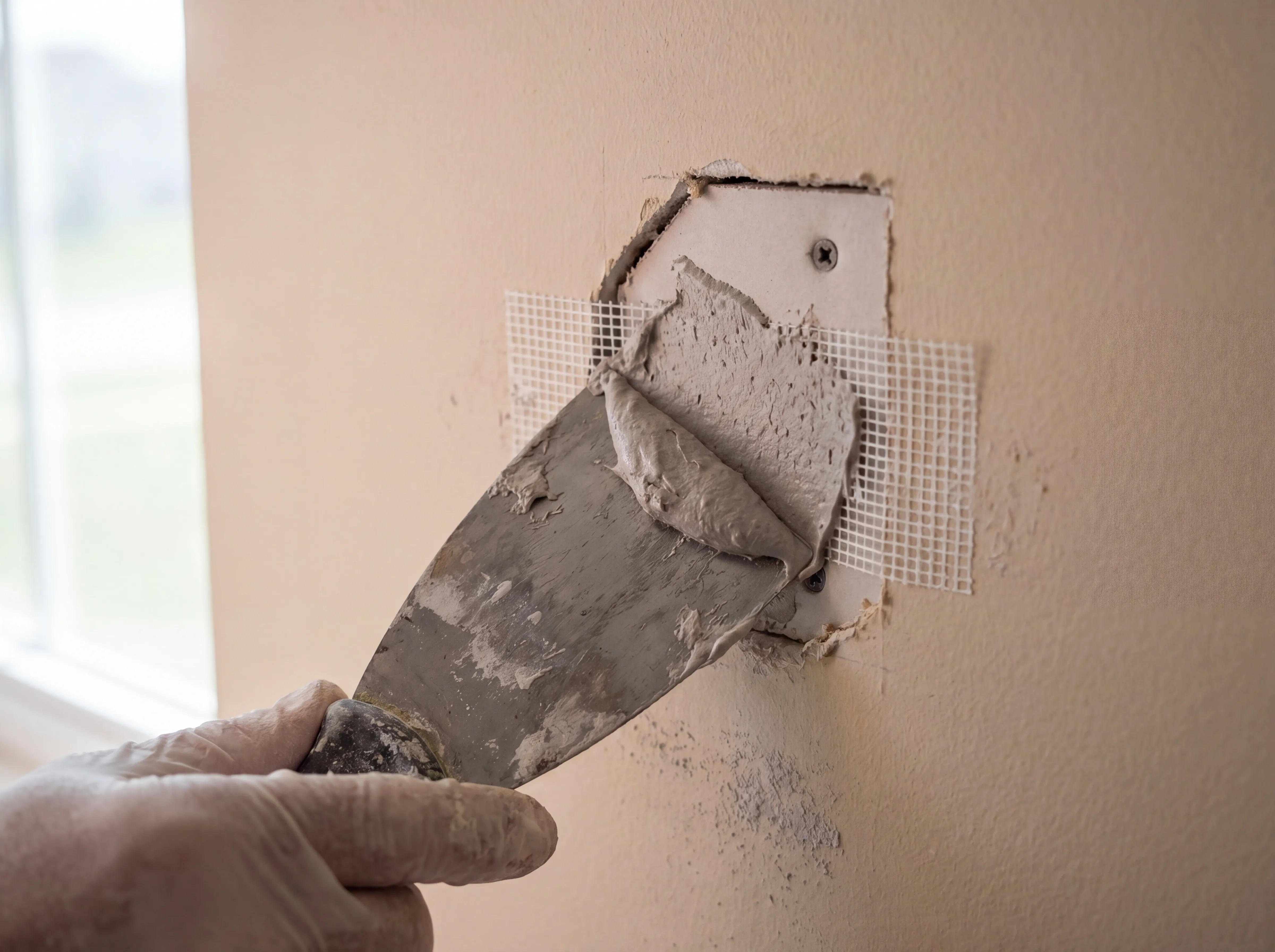
Hole repairs from doorknob impacts, access cuts, or accidental damage require backing support before any fill compound is applied. The backing method depends on hole size. Holes under 4 inches can use a California patch or a clip-back backer. Holes between 4 and 12 inches get a furring-strip backer — a piece of wood screw-set through the existing board on both sides of the cut — which provides a solid substrate for the patch panel and distributes load across the repair. Holes larger than 12 inches typically get cut back to the nearest stud on both sides and filled with a full panel cut-in. The goal in every case is a stable substrate before any compound is mixed.
After the structural repair is complete, the crew matches the existing texture. This is where most patch painters fail — they fill the hole correctly but apply wall texture by hand without matching the original application method, pressure, or aggregate size. JL Drywall and Painting maintains reference samples of the most common Montgomery County residential textures: skip trowel, knockdown (light and medium), orange peel (spray), slap brush, and smooth Level 4 and Level 5. Matching is a visual process done in the right light, not a guess.