The work
How exterior painting actually goes on a JL job.
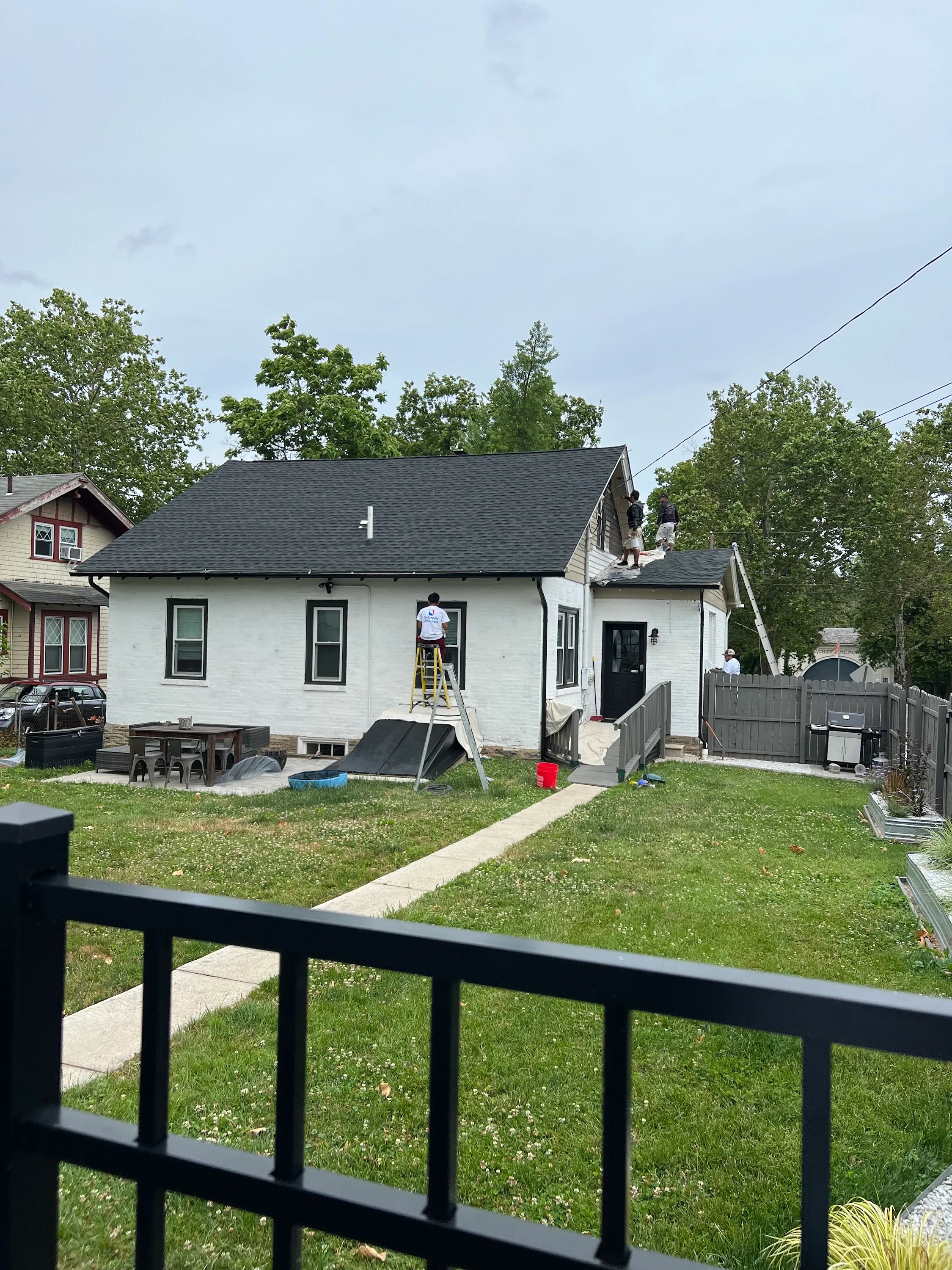
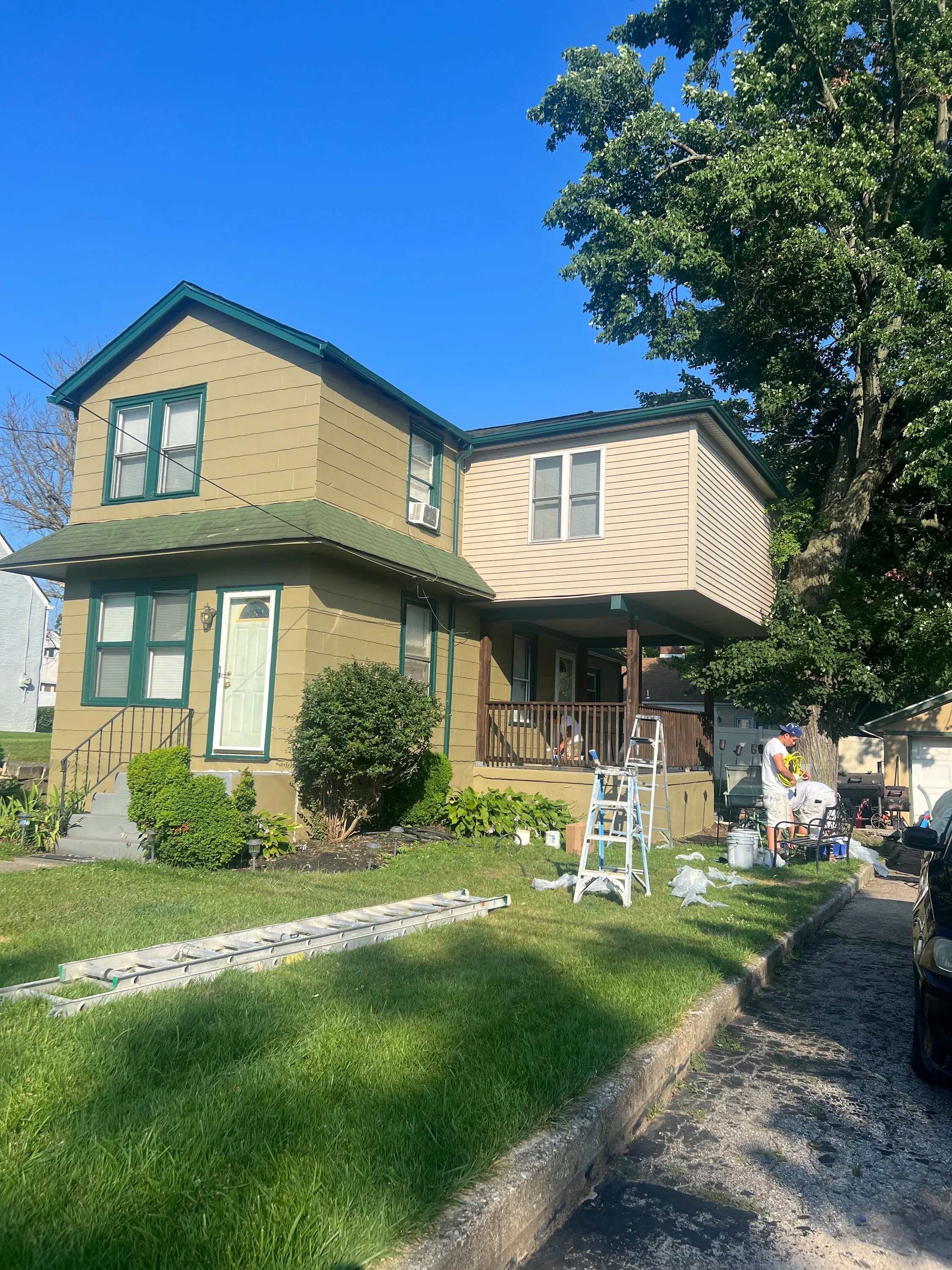
Exterior paint failure in Montgomery County is almost always a prep failure. The humid continental climate — with peak relative humidity in February and October, summer temperatures that routinely reach 86°F, and winters that cross the freezing mark enough times per year to cycle paint film expansion and contraction repeatedly — punishes any exterior paint system that was not applied to a properly prepared, properly primed, fully dry substrate. JL Drywall and Painting applies a five-step exterior prep sequence on every job: mechanical surface prep, wood filler on open grain and damaged areas, shellac or oil-based spot prime on all bare wood, full-surface acrylic primer, and two finish coats in a 100% acrylic product rated for regional climate exposure.
Surface prep is the most time-consuming part of the job and the part most commonly shortcut by production painting crews. Every failing paint surface — whether peeling, chalking, cracking, or alligatoring — must be completely removed before any new material is applied. Peeling latex paint over chalking alkyd will fail in the first winter freeze-thaw cycle regardless of what primer goes on top. the crew uses wire brushes, scrapers, and where necessary an oscillating tool or random-orbit sander to reach bare wood or sound substrate on all failing areas. The standard for what counts as 'sound substrate' is adhesion test: if the old paint does not pass a cross-hatch tape pull without releasing, it comes off.
Wood filler and caulking follow mechanical prep. Open grain on older wood siding, end-grain exposure, and any areas where moisture has caused wood fiber separation are filled with paintable two-component wood filler before any primer is applied. Caulk is applied at all joints between dissimilar materials: wood-to-masonry, trim-to-siding, window and door casings to siding. The caulk product matters — not all paintable caulk is rated for exterior exposure or thermal movement. the crew uses exterior siliconized acrylic caulk rated for temperature swings of 100°F or more, which is the range Montgomery County's climate produces between deep winter and peak summer.
Primer selection is driven by substrate. Bare wood receives an oil-based or shellac-based spot primer — not a latex bonding primer — because oil-based products penetrate the wood fiber rather than sitting on the surface, providing better adhesion and blocking tannin bleed from cedar and redwood elements. The full-surface prime coat is a 100% acrylic exterior primer, applied to the entire surface to provide a consistent, sealed substrate for the topcoat. Applying topcoat directly over spot-primed areas without a full prime coat produces sheen variation and texture differences at the boundary of the primed and unprimed zones.
Finish coats are 100% acrylic latex paint applied in two full coats. JL does not stretch paint — the specified coat thickness is applied using an appropriate tool for the surface (brush for trim and detail work, roller for flat siding fields, airless sprayer for certain large flat surface applications). The final inspection is done in raking light to identify any holidays, thin spots, or sheen inconsistencies before leaving the site. Exterior painting timelines are weather-dependent: paint should not be applied below 50°F or above 90°F, in direct sunlight on hot surfaces, or within 24 hours of expected rain. the crew monitors the forecast and adjusts scheduling to protect the coating system.